“We’ll just renovate the old store” sounds like the affordable option — until you learn what decades of water, detergent, and vibration do to a building. If you’re taking over an aging laundromat, here’s what a real rebuild involves, and why sometimes the smart money tears out the old slab and starts clean.
1. Utility locations come first
Before anything gets broken, every utility on the site gets located and marked — water, sewer, gas, electric. On older laundromats, the as-built drawings (if they exist) are often wrong, and these buildings hide a lot of plumbing in and under the slab. Cutting into an unmarked line turns a one-week demo into a very bad month.
2. Disconnects and permits
Utilities get formally disconnected and capped, and the demolition permit gets pulled. Unglamorous paperwork — and the part that protects the owner when it’s time to get the new store inspected.
3. Soft strip
Old machines, fixtures, and finishes come out first, sorted as they go. Metals have salvage value, and a sorted load costs less to dispose of than a mixed one.
4. Breaking the concrete
Laundromat slabs fail in a specific way: cracking around floor drains and trench lines, crumbling where moisture lived for decades. Reinforced concrete doesn’t just shatter — the steel holds it together, so it gets separated as the slab comes apart.
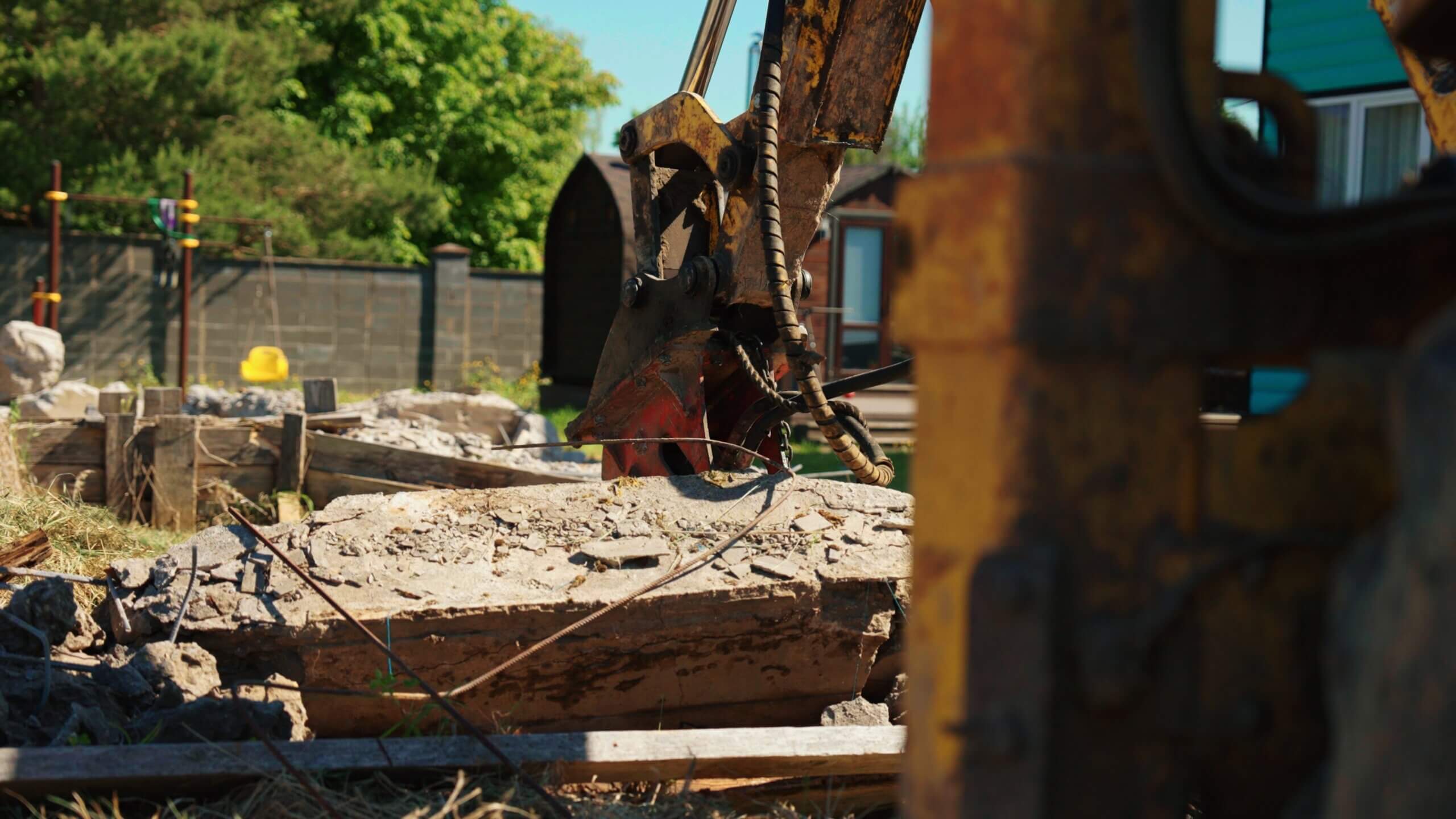
5. What’s left behind matters most
A demo isn’t finished when the concrete is gone. It’s finished when the site is ready for what’s next — old footings and buried lines removed or properly abandoned, trenches backfilled and compacted, grades left workable. A site that “looks cleared” but hides soft backfill will punish the new slab poured on top of it — and a laundromat slab carries dozens of machines spinning heavy loads all day.
6. Building it for water
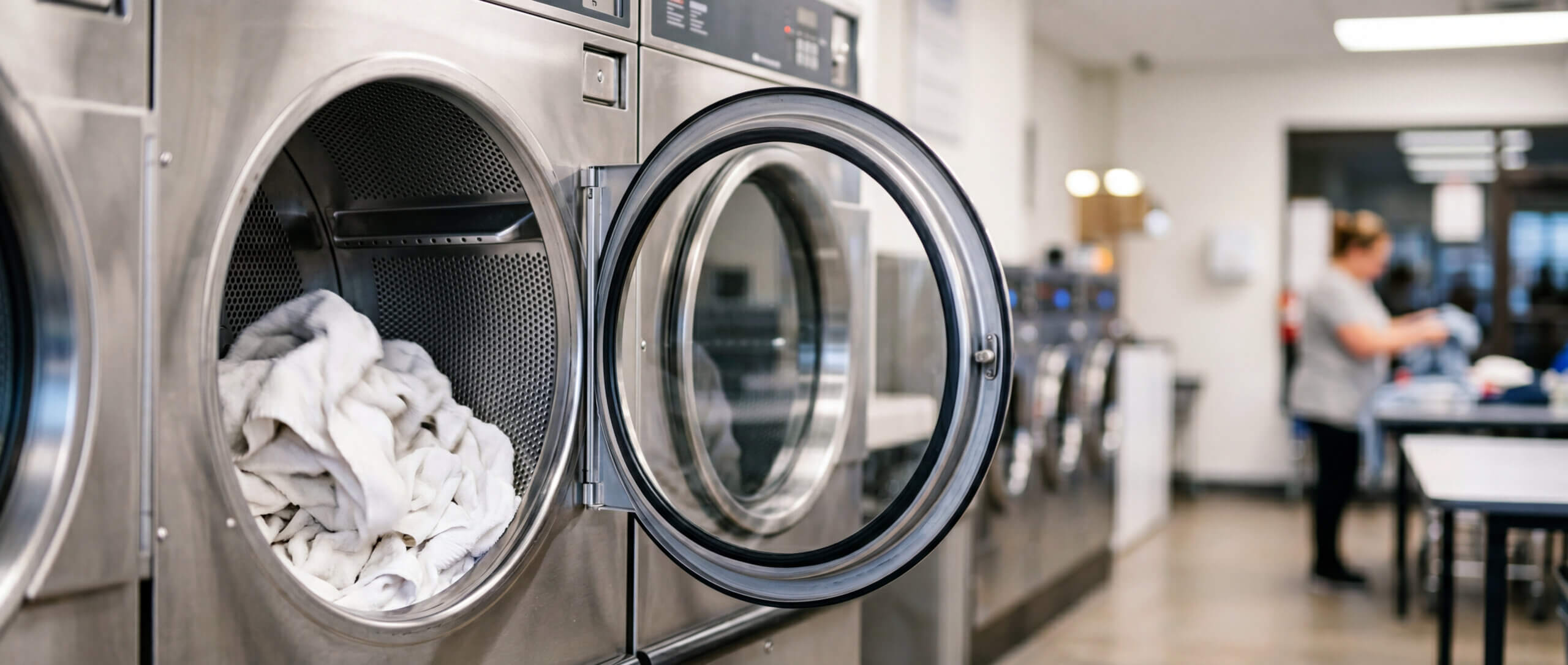
The new store gets what the old one never had: utility rough-ins sized for modern high-capacity washers, floor drainage designed in rather than added later, and a slab specified for equipment loads. Then comes our favorite part — the machines.
The advantage of one team
When the company that installs and services your washers is the same one managing the teardown and rebuild, every decision — drain locations, slab flatness, utility sizing — is made with the equipment in mind. We’re taking a laundromat in Grove Hill, Alabama through exactly this process right now: old concrete out, new slab and 36-inch trench in, store on track to open in mid-August.
Thinking about rebuilding a store? We’ll walk the site with you and tell you straight what it needs. Call 888.366.7065.